C-Wise is a business focused on improving soil carbon through the manufacture of compost made from recycled inputs such as FOGO, Greenwaste, and Organic by-products. Our ultimate goal is to ensure organic waste is properly composted and returned to the ground, capturing carbon rather than sending it to landfill. However, the journey from household bin to healthy soil is not without its challenges.
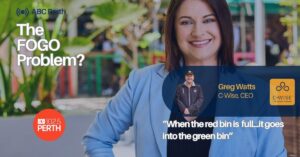
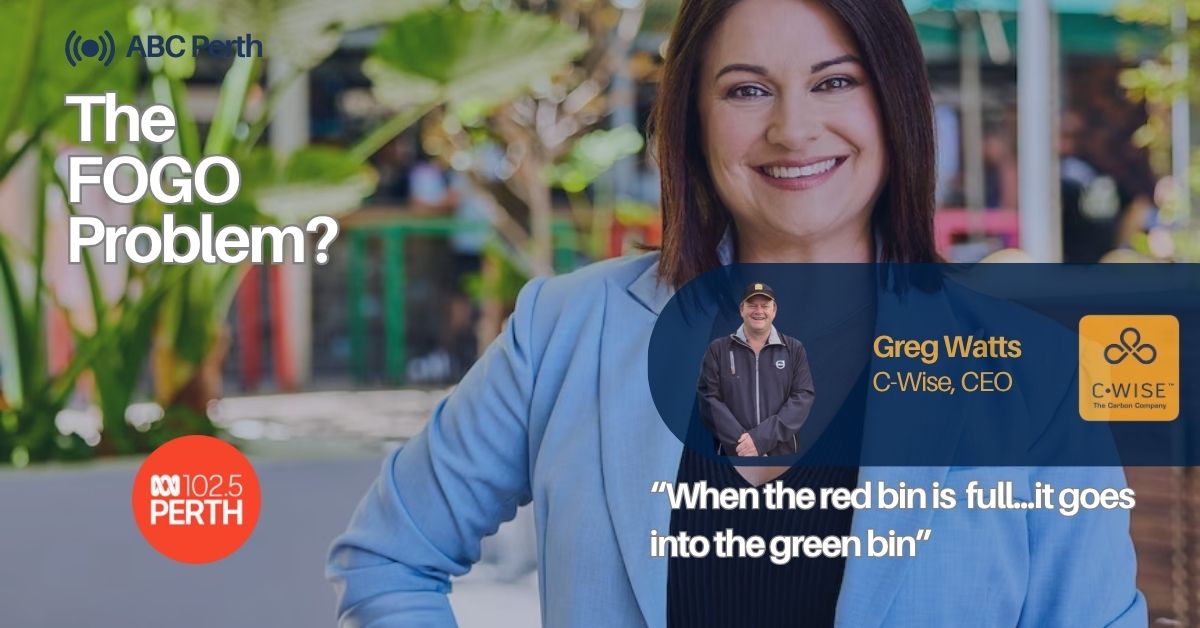
Recently, our CEO, Greg Watts, joined ABC Mornings to discuss the current state of the Food Organics and Garden Organics (FOGO) rollout in Western Australia. The conversation highlighted a significant issue facing the industry: contamination.
While the environmental goals of the FOGO initiative are commendable, the practical rollout is struggling. A primary cause of contamination occurs when household “red bins” (general waste) reach capacity. With some councils reducing the size of general waste bins or moving to fortnightly collections, excess rubbish is frequently dumped into the green FOGO bin.
The misunderstanding of what constitutes “garden organics” also leads to bizarre contamination. Greg shared an extreme example from Launceston where items like garden gnomes, spare tyres, and oil drums were placed in FOGO bins simply because they were located “in the garden.” This level of contamination not only ruins the compostable material but also introduces significant safety risks into the recycling process.
So, how do we fix the FOGO problem?
Greg suggests that shifting from a mandatory system to an “opt-in” model could be a game-changer. When households actively choose to participate in a FOGO scheme, they are generally more diligent and use the bins correctly. This leads to a higher quality of organic material that can be successfully transformed into nutrient-rich compost. Furthermore, community influence plays a massive role. Positive peer pressure is powerful; if people see their neighbours using the green bins correctly, they are far more likely to adopt the correct behaviour themselves.
At C-Wise, we remain committed to pioneering industrial ecology. We engineer high-performance soil improvers specifically for the demands of broadacre farming, creating a sustainable circular system where nutrients from community waste return to the soils of vital farming regions like the WA Wheatbelt and the Peel-Harvey Food Basin. Over the past three growing seasons, our commercial trials for broadacre cropping have shown that applying our compost can reduce granular fertiliser applications by over 30% while maintaining yields.
To make this circular economy work, we need clean, uncontaminated FOGO. It requires a collective effort to educate, participate, and ensure that what goes into the green bin truly belongs there. Only then can we successfully give carbon a second chance.
Check out the Full Interview – https://youtu.be/O33WeKb4Tz0